
Recovery vs. Towing: What’s the Difference?
When most people think of calling a tow truck, they picture a vehicle being loaded onto a truck and transported from one place to another. While that is a common part of the job, not every situation is a simple tow.
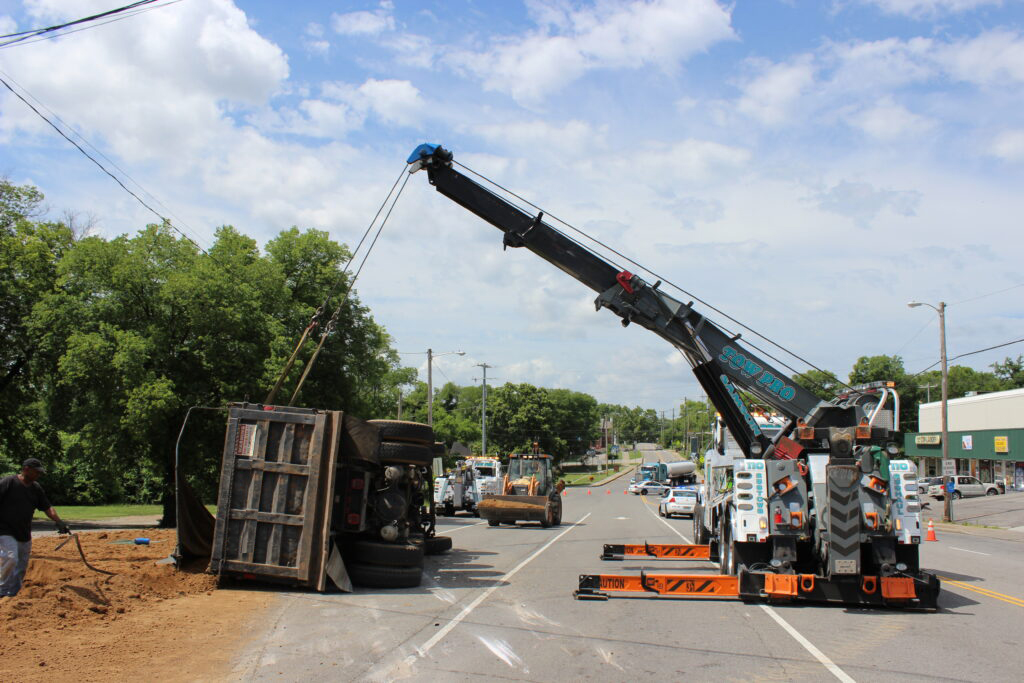
Sometimes a vehicle is stuck, overturned, off the roadway, involved in an accident, or positioned in a way that requires specialized equipment and additional safety precautions. That is when the job may become a recovery.
Understanding the difference between towing and recovery can help drivers, fleet managers, property owners, and commercial operators know what kind of help they may need when something goes wrong.
What Is Towing?
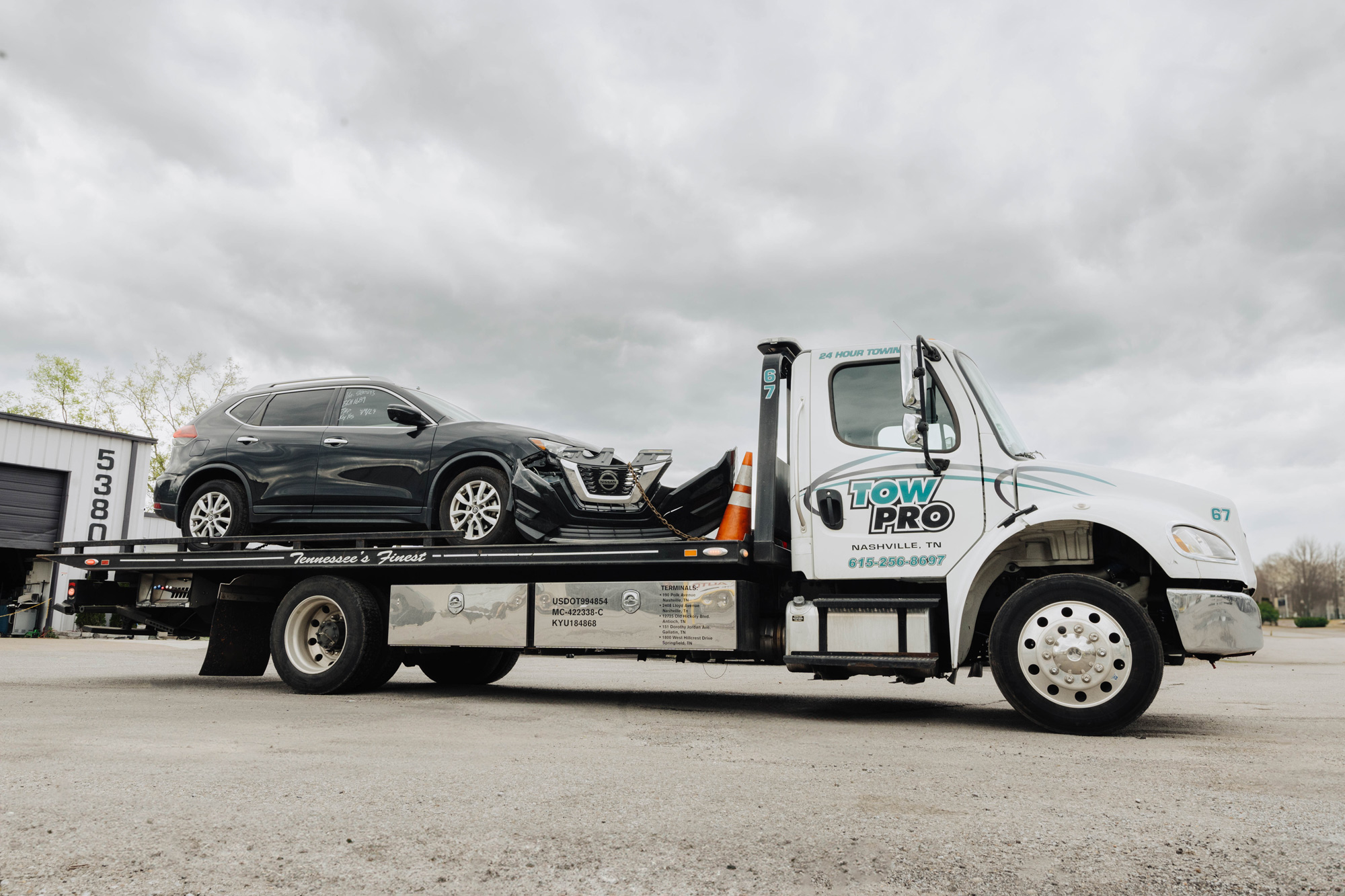
Towing typically refers to transporting a vehicle from one location to another.
This may include moving a disabled car from the side of the road to a repair shop, transporting a vehicle after a breakdown, moving a commercial truck, or relocating equipment. In many cases, towing is needed when the vehicle is accessible, stable, and able to be safely loaded using standard towing equipment.
Common towing situations include:
- A car that will not start
- A vehicle with a flat tire
- A disabled vehicle after a mechanical issue
- Transporting a vehicle to a repair facility
- Moving a commercial truck or fleet vehicle
- Transporting a vehicle after a minor accident
For many roadside calls, towing is the right solution. The vehicle is secured, loaded, and transported safely to the next destination.
What Is Vehicle Recovery?
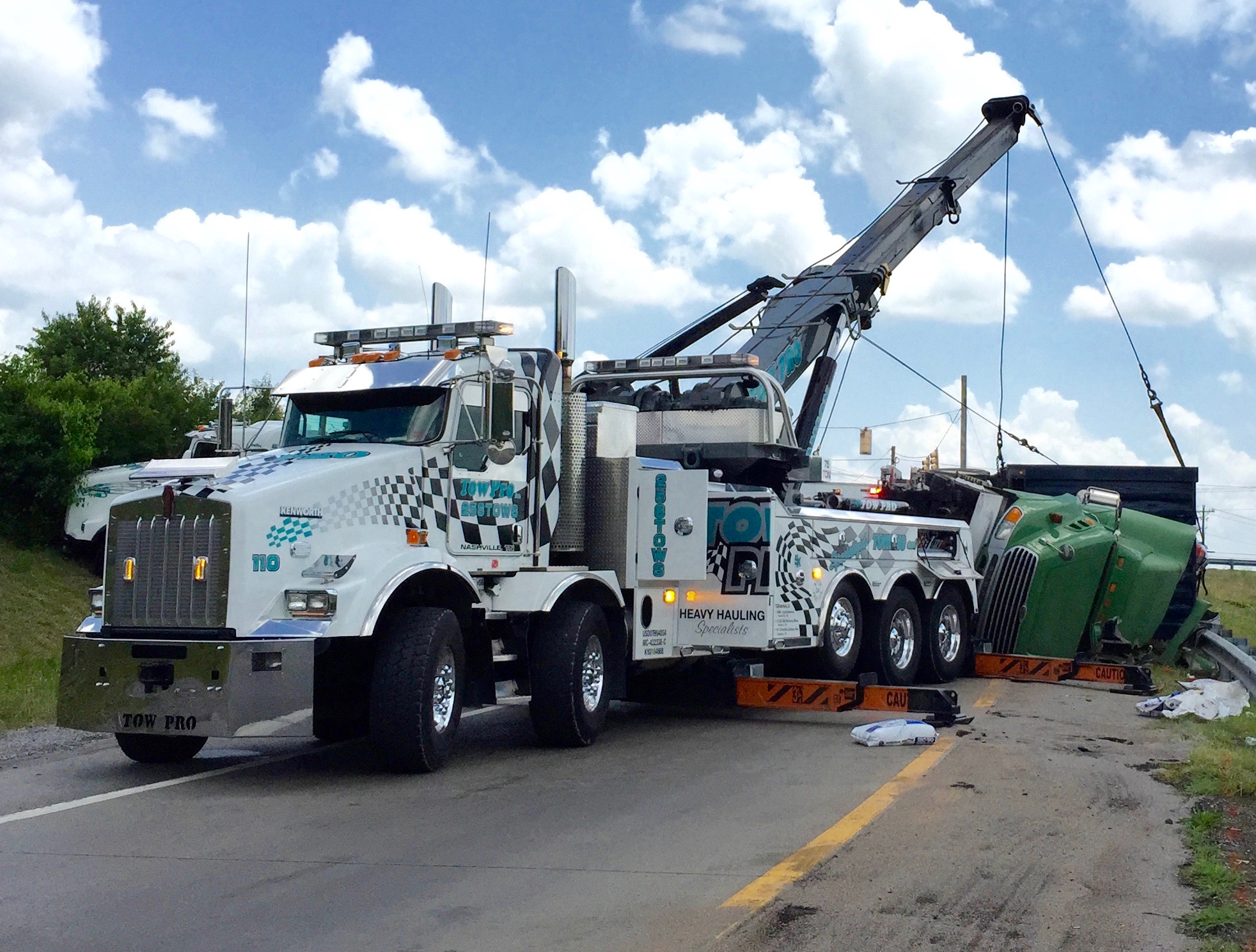
Vehicle recovery is different from standard towing because the vehicle usually cannot be moved safely without first being stabilized, re-positioned, lifted, winched, or extracted.
Recovery often involves more complex conditions, including difficult terrain, accident scenes, heavy vehicles, or vehicles that are no longer sitting normally on the roadway. These jobs require additional planning, equipment, and training to complete safely.
Common recovery situations include:
- A vehicle stuck in a ditch
- A car or truck off the roadway
- A rollover accident
- A vehicle stuck in mud, grass, gravel, or uneven terrain
- A commercial truck or trailer that needs to be uprighted
- A vehicle that needs winching before it can be towed
- Accident recovery after a collision
- Heavy-duty recovery involving tractor-trailers, buses, or equipment
In these situations, the first goal is not simply to tow the vehicle. The first goal is to recover it safely.
The Main Difference Between Towing and Recovery
The main difference comes down to the condition and position of the vehicle.
If the vehicle is accessible, stable, and ready to be transported, the service is usually towing.
If the vehicle is stuck, overturned, off-road, damaged, or in a difficult position, it may require recovery before it can be towed.
A simple way to think about it is:
Towing moves the vehicle. Recovery gets the vehicle into a safe position so it can be moved.
That distinction matters because recovery work often requires more time, more equipment, more operators, and a higher level of safety coordination.
Why Recovery Requires Specialized Equipment
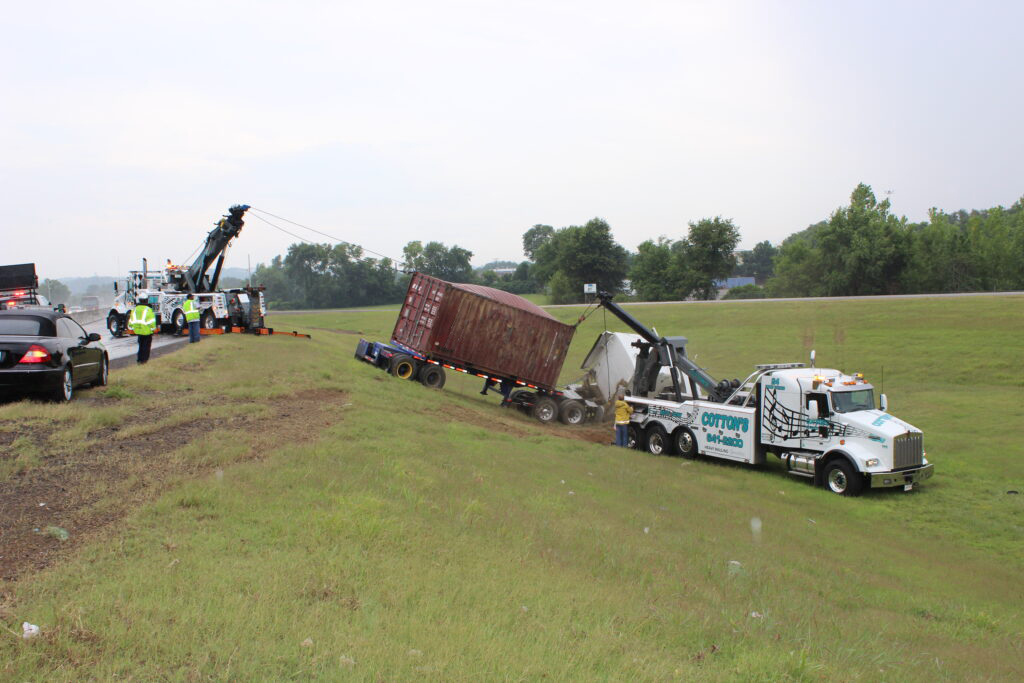
Recovery jobs can involve a wide range of equipment depending on the situation. A trained recovery team may use winches, cables, rotators, heavy-duty wreckers, flatbeds, air cushions, rigging, chains, straps, and other specialized tools.
The equipment used depends on the vehicle type, its position, the surrounding area, and the safest method for completing the job.
For example, pulling a car out of a ditch is very different from uprighting a loaded tractor-trailer. Recovering a vehicle from soft ground is different from moving a vehicle involved in a highway collision. Each situation requires the operator to assess the scene and choose the safest approach.
Why Training and Experience Matter
Recovery work is not just about having a large truck. It requires judgment, experience, and proper technique.
An experienced recovery operator knows how to evaluate weight, balance, angles, traffic conditions, road hazards, and potential damage before beginning the job. The wrong approach can create additional damage, increase risk at the scene, or make the recovery more difficult.
Professional recovery teams focus on:
- Protecting the vehicle
- Protecting the customer
- Protecting other drivers on the road
- Protecting property
- Reducing additional damage
- Completing the job safely and efficiently
This is especially important for heavy-duty recovery, commercial vehicles, fleet trucks, and accident scenes where the situation may be more complex.
When Does a Tow Become a Recovery?
A tow may become a recovery when the vehicle cannot be safely loaded or transported without extra work first.
Examples include:
- The vehicle is off the road
- The vehicle is stuck in mud, grass, or gravel
- The vehicle is partially blocked or trapped
- The vehicle is overturned
- The vehicle is damaged after a crash
- The wheels cannot roll freely
- The vehicle is in a tight or unsafe location
- The vehicle needs to be winched before loading
- The vehicle is a heavy-duty truck, bus, trailer, or piece of equipment in a difficult position
In these cases, the towing company may need to send different equipment or additional operators to handle the job properly.
Light-Duty Recovery vs. Heavy-Duty Recovery
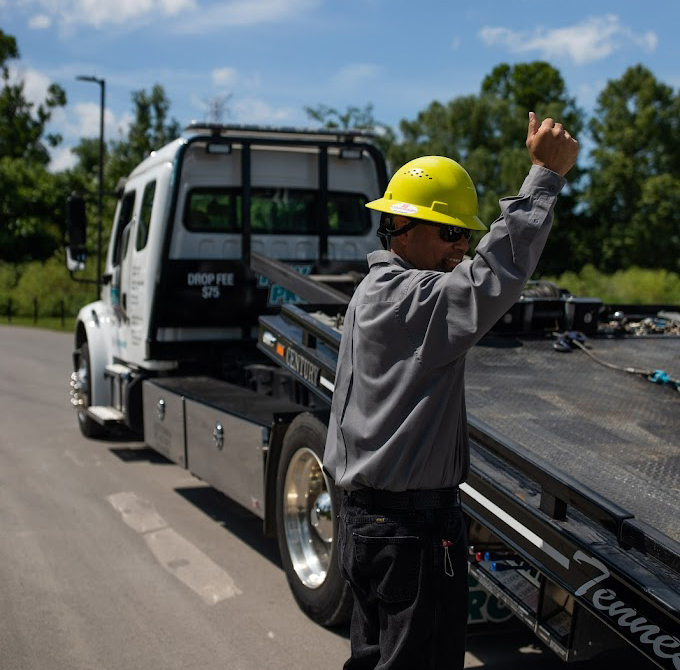
Recovery can involve both passenger vehicles and commercial vehicles.
Light-duty recovery may include cars, pickup trucks, SUVs, motorcycles, or vans that are stuck, disabled, or involved in an accident.
Heavy-duty recovery may involve tractor-trailers, box trucks, buses, RVs, construction equipment, loaded trailers, or fleet vehicles. These jobs typically require larger equipment, more advanced rigging, and a higher level of coordination.
Tow Pro provides both towing and recovery services, which means our team can respond to a wide range of situations across Tennessee.
Why This Matters for Fleet and Commercial Customers
For fleet managers and commercial operators, the difference between towing and recovery is especially important.
When a commercial vehicle is stuck or involved in an accident, downtime can quickly become expensive. Choosing a company with towing and recovery capabilities helps ensure the right equipment is dispatched from the beginning.
That can reduce delays, prevent unnecessary transfers, and help get the vehicle, driver, and cargo situation handled as efficiently as possible.
Commercial recovery may involve:
- Tractor-trailer recovery
- Box truck recovery
- Bus recovery
- Fleet vehicle towing
- Equipment transport
- Winching
- Accident recovery
- Heavy-duty towing
For businesses that rely on vehicles every day, having a dependable towing and recovery partner can make a major difference.
How to Know What Service You Need
If you are not sure whether you need towing or recovery, the best thing to do is explain the situation clearly when you call for help.
Helpful details include:
- Where the vehicle is located
- Whether it is on the road, off the road, or in a ditch
- Whether the vehicle is stuck, overturned, or damaged
- The type of vehicle
- Whether it can roll, steer, or brake
- Whether the area is safe for a tow truck to access
- Any hazards nearby, such as traffic, water, mud, or steep ground
The more details dispatch has, the easier it is to send the right truck and equipment.
Tow Pro Towing and Recovery Services Across Tennessee
Tow Pro provides professional towing, roadside assistance, accident recovery, heavy-duty towing, and vehicle recovery services across Tennessee.
Through our family of trusted companies, including Tow Pro Nashville, A.B. Collier, Cotton’s Towing, Davenports Towing in Memphis, Cedar Bluff Towing, Chestnut Street Towing, Tow Pro Gallatin, and Tow Pro Springfield, we serve drivers, businesses, fleets, and commercial customers throughout Nashville, Memphis, Knoxville, Middle Tennessee, West Tennessee, East Tennessee, and surrounding communities.
Whether you need a standard tow, winching, heavy recovery, or commercial vehicle support, our team is available 24/7 to help.
Final Thoughts
Towing and recovery are closely related, but they are not always the same service.
Towing is usually the process of moving a vehicle from one location to another. Recovery involves safely extracting, stabilizing, or repositioning a vehicle before it can be moved.
When the situation is more complicated than a standard tow, choosing an experienced towing and recovery company helps protect your vehicle, your property, and everyone at the scene.
If you need towing, roadside assistance, or vehicle recovery in Tennessee, Tow Pro is ready to respond 24 hours a day, 7 days a week.
Need assistance? Call Us Now (615) 256-8697